
The Fed held rates steady again. But the tone changed.
Inflation is moving higher, driven by energy, while rate cuts are becoming less likely. At the same time, the geopolitical situation adds another layer of uncertainty that the market can’t easily price in.
This creates a difficult setup for crypto. Not necessarily bearish in a straight line, but far from the conditions that usually support broad risk-taking.
In this post, I’ll break down what the latest FOMC meeting tells us, how current financial conditions are evolving, and what that means for crypto positioning.
📬 In this issue:
What the latest Fed decision really means
How current conditions shape the macro regime
How I’m positioned in this environment
FOMC Meeting
The latest FOMC meeting on 29.04. confirmed what the market was already starting to price in. The Fed decided to keep rates unchanged at 3.65% for the third consecutive time. No cuts, no hikes. But the reasoning behind it is more important than the decision itself.
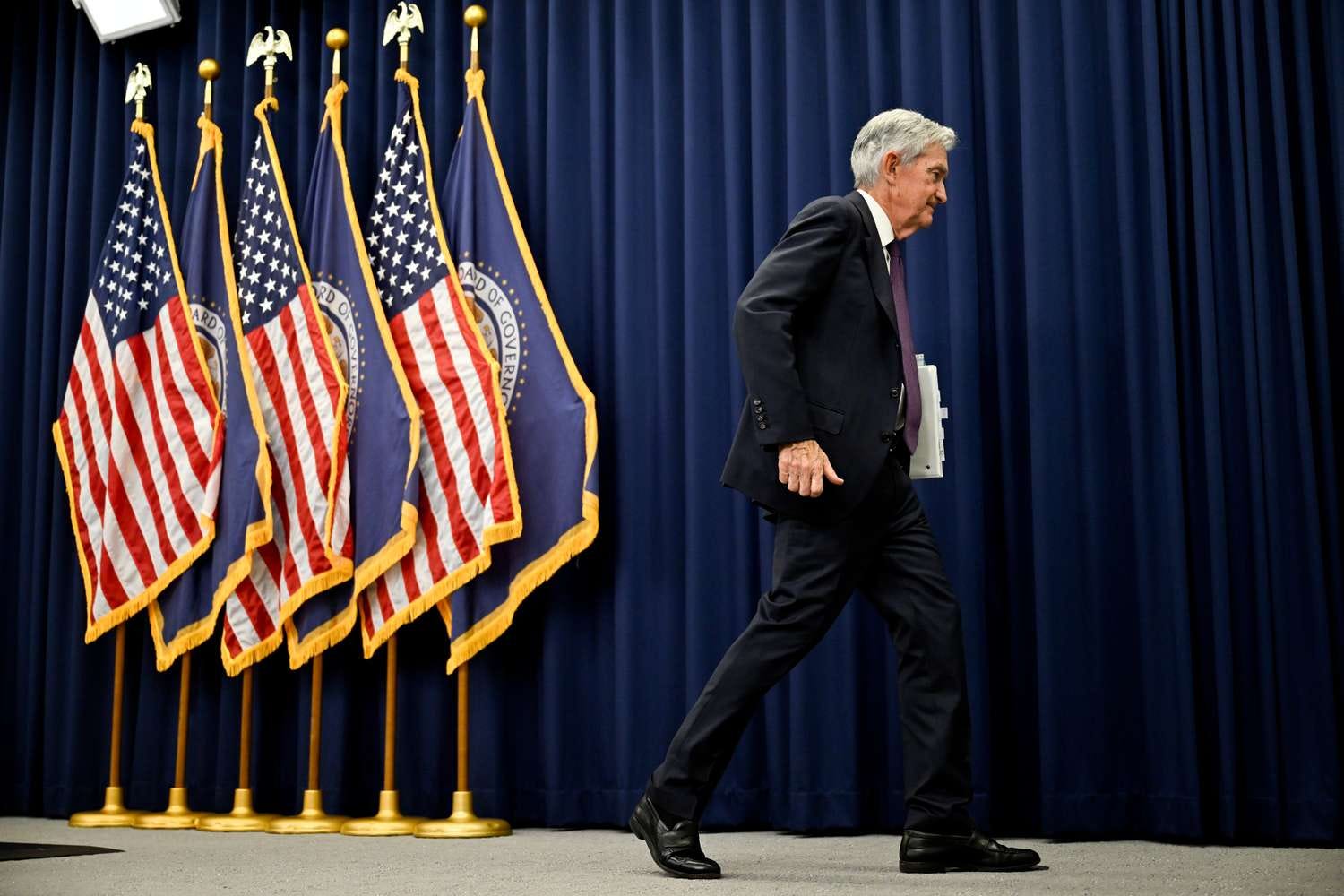
In his last press conference as the Chairman of the Fed, Jerome Powell acknowledged that the US economy is still expanding. At the same time, he pointed out that inflation is moving higher again, largely due to rising energy prices linked to geopolitical tensions in the Middle East.
This creates a difficult position for the Fed. Rates are relatively high, but not high enough to bring inflation back toward target. At the same time, cutting rates would risk accelerating inflation further.
In previous cycles, rate pauses often came before easing. But this time, the constraint is different. Inflation is not purely demand-driven. It is increasingly supply-driven, which limits how aggressively the Fed can respond.
The result is a regime where liquidity cannot expand in a meaningful way. For crypto, this matters directly. Broad altcoin rallies typically require expanding liquidity and improving financial conditions. When rates stay elevated and inflation remains a concern, that setup doesn’t materialize.
This is why the current environment is not a natural setup for high-beta assets.
The Whole Picture (Aside From the Fed)
When you look beyond the Fed decision itself, the broader picture becomes clearer.
Unemployment remains relatively stable around 4.3%, which gives the Fed room to stay patient. There is no immediate pressure from the labor market that would force rate cuts.
At the same time, inflation metrics are moving in the opposite direction. Core PCE is still around 3%, which is already above target even without energy effects. CPI has moved higher as well, driven largely by oil prices. This combination suggests that inflation pressure is not easing, but gradually building.
Real interest rates remain positive, around 0.7%, and the downtrend is weak. This is important because it means investors are still being rewarded for holding safer assets. That reduces the incentive to move capital into higher-risk assets like altcoins.
The DXY has been trading in a relatively tight range between 95 and 100 for an extended period. This kind of range usually signals indecision. A stronger dollar typically pressures risk assets, while a weaker dollar supports them. The fact that DXY is stuck in this range suggests that the market has not yet committed to either a clear risk-on or risk-off direction.
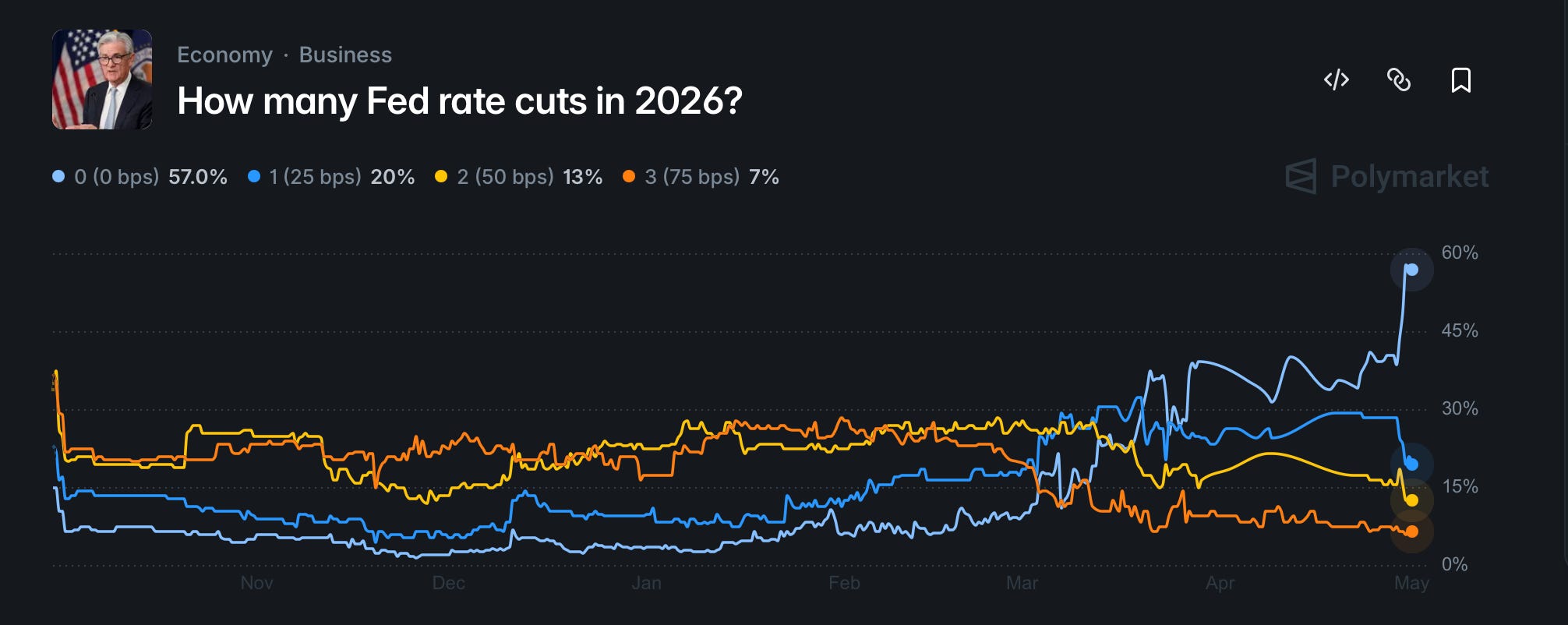
Polymarket expectations reinforce this uncertainty. The probability that the Fed will not cut rates at all this year has increased to around 57%, up from 42% last month.
At the same time, the market assigns only about a 30% chance that the US–Iran conflict will be resolved by the end of June. This indicates that investors are gradually pricing in a more prolonged period of elevated inflation risk.
When you combine these signals, the current regime points toward a risk of stagflation. Inflation is rising, while growth faces pressure.
Historically, this is not an environment that supports broad risk expansion. Liquidity tends to grow slowly and without momentum, and capital allocation becomes more selective.
The biggest risk right now is that inflation continues to rise while policy remains constrained. In that scenario, both growth and risk assets struggle at the same time.
My Positioning ATM
Given this setup, my current allocation is split between 50% BTC and 50% gold.
I made that transition on April 23rd, when the BTC/Gold ratio reached the 0.06 level. This wasn’t a price-driven decision, but a regime-driven one.
In an environment where inflation risk is rising and liquidity is not expanding meaningfully, I prefer assets that are more resilient to uncertainty. Bitcoin still carries risk, but relative to altcoins, it tends to hold better in constrained conditions. Gold, on the other hand, benefits directly from inflation-driven narratives.
At the same time, I’m still actively monitoring altcoins, especially Solana and Ethereum. If they reach levels that I consider structurally attractive, I’m open to allocating part of the portfolio, even if the broader regime hasn’t fully shifted.
What would change my positioning is a clear improvement in the macro environment. That would likely require a de-escalation of the conflict, a decline in oil prices, and a more stable inflation outlook.
Until then, I remain cautious.
Let me know how you see it. 🍻
Closing Words
All of this comes from tracking market conditions in a structured way.
I’m a retail investor, just like most of you, and also a co-founder of Denomos. On the platform, we track key macro indicators such as liquidity, real interest rates, inflation, and many others that help us understand the current regime.
The goal is not to predict the future, but to better understand the environment we are operating in.
If you find this type of analysis useful, consider subscribing, hitting the ❤️ button, or sharing the post. It helps this newsletter reach other retail investors trying to navigate the same questions.
And feel free to leave a comment with your thoughts or questions. 🍻
This is not financial advice.