

The price of silver is currently experiencing its strongest rally since 1979/80, when the famous “silver cornering” episode led to a price increase of more than 700% within a single year. In the current cycle, silver is up roughly 235% over the past year.
Why is this happening now?
How much higher could silver realistically go when viewed through historical price behavior?
Why does silver matter to humans in the first place, and how scarce is it really?
And finally, can silver be bought on the blockchain in 2025 (since this is, after all, an investment profile focused on crypto)?
All of that—and a bit more—in a 10-minute retail investor master thesis on silver.
Let’s begin.
A Brief History of Silver
Humans have used silver for more than 5,000 years, making it one of the oldest metals to play a meaningful role in economic, technological, and cultural history.
One reason for silver’s early adoption is that it often appears in native metallic form in nature, allowing humans to access it from shallow deposits close to the Earth’s surface. In addition, processing silver did not require advanced smelting techniques or chemical knowledge, unlike metals such as iron.
Silver’s role as a monetary medium of exchange dates back to around 3000 BCE, when it was used as a unit of account in Mesopotamia. Over the centuries, its use spread through Ancient Greece and Asia and eventually across much of the known world. For a long time, silver functioned as everyday money within bimetallic monetary systems, while gold was reserved for larger transactions.
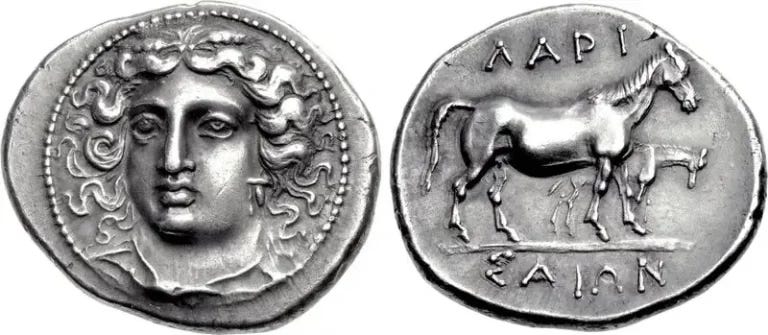
During the 19th century, gold gradually replaced silver as the dominant standardized monetary asset. This shift occurred for several reasons, including gold’s lower inflation rate, higher value density, and the fact that silver developed broad industrial applications, whereas gold largely retained its role as a purely monetary asset whose availability was not constrained by industrial demand.
Silver Today
Silver has the highest electrical and thermal conductivity of all metals and also possesses strong antibacterial properties. As a result, beyond its monetary and jewelry use, silver plays a crucial role in many industries, particularly:
1. Electronics and Electrical Engineering
connectors
conductive contacts
printed circuit boards
chips and semiconductors
This represents the single largest sector of silver consumption.
2. Solar Industry (growing usage)
silver is used in silver paste for photovoltaic cells
3. Automotive Industry (growing usage)
especially electric vehicles (EVs)
4. Medicine and Pharmaceuticals
antibacterial coatings
medical devices
wound care and implants
5. Chemical Industry
catalysts
industrial processes

Silver Scarcity and Inflation
Estimates suggest that approximately 1.7–1.8 million metric tons of silver have been mined to date. This includes investment silver (bars and coins), jewelry, silver embedded in industrial products, and a portion that has effectively been lost due to uneconomical recycling.
For comparison, around 210,000 metric tons of gold have been mined, meaning silver is significantly more abundant—roughly 8–9 times more—but also far more heavily consumed.
An important point is that most silver today is not mined as a primary metal, but rather as a byproduct of copper, zinc, lead, and gold mining. This means that silver supply does not respond quickly to silver prices, but instead depends on the production economics of other metals.
Current estimates suggest there are about 550,000–600,000 metric tons of silver reserves still in the ground (compared to 55,000–60,000 tons for gold). At the same time, annual silver production amounts to roughly 25,000–27,000 tons, implying a monetary inflation rate of about 1.5–1.7% relative to existing above-ground silver.
Dividing 600,000 by 25,000 suggests that reserves would be depleted in about 24 years at current mining rates.
Does this mean silver will “run out” as a resource in 25 years? Not really.
Silver reserves are not the same as silver resources. Reserves refer to silver that is economically viable to extract using current technology and prices. Resources include silver that is known to exist but is currently uneconomical to mine, as well as silver that is assumed to exist but has not yet been discovered or confirmed.
As technology improves and price incentives rise, new deposits become accessible and resources are converted into reserves. In fact, silver reserves have remained relatively stable for decades despite continuous mining.
Of annual new silver supply, roughly 50–60% is consumed by industry, with the remainder going into jewelry, silverware, and investment products (bars, coins, ETFs, and tokenized silver). Notably, silver exhibits nearly half the effective monetary inflation of gold relative to the total amount mined. Because silver is often used in microscopic quantities embedded within complex products, recycling is frequently uneconomical—even when technically possible—making a significant portion of annual silver production a permanent loss.
Why Has Silver Rallied So Strongly in Recent Weeks?
Silver has been one of the best-performing investment assets this year (congratulations to everyone whose patience paid off!🍻). Several factors explain this rally, with the most important being:
Strong industrial demand (solar panels, EVs, data centers): According to the Silver Institute, industrial demand has exceeded annual supply since 2020–2021. At the same time, silver supply cannot expand easily because production is largely a byproduct of other metals and does not respond quickly to rising prices.
Geopolitical uncertainty: The global landscape has been changing rapidly over the past 15–20 years. Increasing fragmentation driven by China’s expansion has weakened the USD-centric system, pushing investors toward alternative asset classes for capital preservation, such as silver, gold, and Bitcoin. Wars in Europe and the Middle East further amplify investor caution.
What Is the Current Fair and Maximum Price for Silver?
Silver (unlike Bitcoin) is a mature asset, having served as a monetary metal for thousands of years and maintaining a large, stable base of real-world usage. Its adoption is not exponential in the way new networks are.
If we examine silver’s historical peak prices in 1980 and 2011 relative to M2 money supply, the implied maximum price range today lies between $125 and $715 per ounce. Any sustained move above $125 would already represent a very strong outcome and likely place silver in overextended territory (this is not financial advice).
Moreover, based on historical pricing and today’s M2 money supply, my estimate for silver’s fair value is approximately $35.7 per ounce.
Important: My analyses are, of course, far less sophisticated than institutional models, but they are sufficiently robust to give retail investors a better context for assessing whether silver is cheap or expensive.
How to Buy Silver on the Blockchain?
Buying silver via blockchain falls under the broader concept of tokenized real-world assets (RWA), aka digital tokens representing physical assets. However, realistic expectations are essential. As of 2025, there is still no tier-A issuer of tokenized silver comparable to what Tether (USDT) or Circle (USDC) represent in the stablecoin space. Tokenized silver exists, but the market remains relatively small and fragmented.
The largest and most well-known tokenized silver project today is XAGx Silver Token on the Avalanche C-Chain. The model mirrors tokenized gold: 1 token represents 1 ounce of physical silver. However, while XAGx is an interesting experiment, several objective limitations should be noted:
The project is based in Georgia, a beautiful country with a rich history, but not a major global financial center, setting institutional RWA standards.
Levels of independent auditing, regulatory clarity, and institutional recognition are lower than what would be expected from globally mature RWA products.
As a result, XAGx should currently be viewed more as an early proof of concept than as an institutionally mature financial instrument.

Final Words
Will silver continue to rise?
What do you think is the maximum price silver could reach in this cycle?
I am a co-founder of Denomos, an analytical platform for crypto retail investors, where you can find interactive silver charts as well as regularly updated fair and maximum price estimates based on my methodological framework (feel free to reach out if you’d like to test the platform for free for one week). My Substack covers topics relevant to retail investors like myself—from asset classes such as silver, to macro analysis, and broader discussions from the crypto space.
If you find this type of analysis useful, feel free to subscribe to the profile, send a message, or leave a comment with topics you’d like me to explore in future posts.
Thank you for your time.