
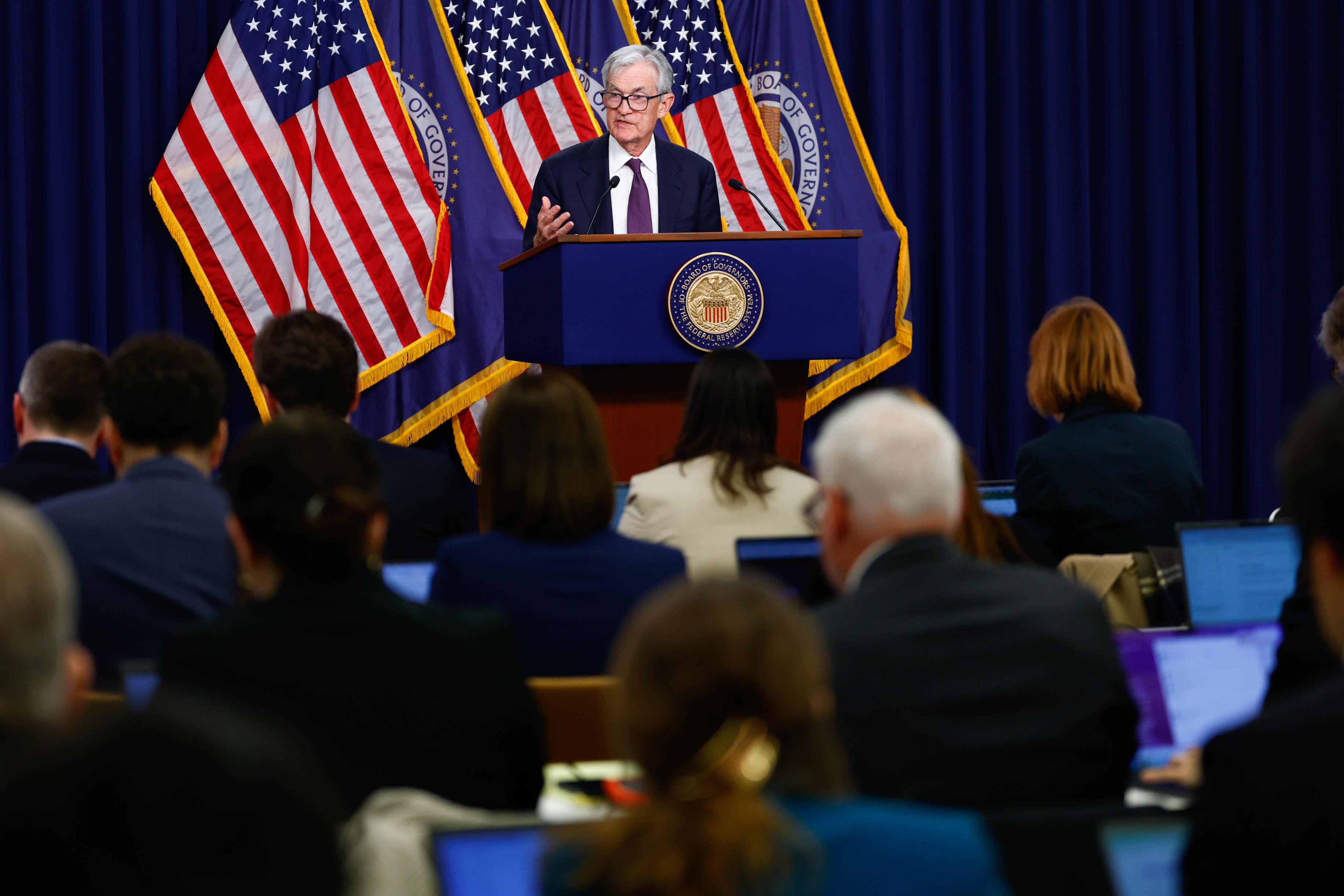
Welcome back! Yesterday’s FOMC meeting gave us a familiar outcome (🥱). However, while the market conditions appear stable on paper, the setup is less comfortable in practice. Liquidity is not expanding at all, and the path the Fed is projecting does not fully align with the data.
For the broader crypto market, this is not a supportive environment.
This weekly article focuses on one thing only: determining where financial markets are heading and what that means for crypto and my portfolio.
📬 In this issue:
FOMC decision and what it actually implies
Other key macro indicators
Crypto market positioning
Portfolio implications
Before we dive in, one small favor: if you find this useful, consider hitting the ❤️ or sharing the post.
As a fellow retail investor, I’ve been tracking this closely, so let’s break it down simply.
FOMC, Fed Interest Rate, and Its Implications
The Fed kept rates unchanged in the 3.5–3.75% range, and the decision is relatively straightforward when you look at the inflation data.
Inflation is not declining in a convincing way. CPI is holding around 2.4%, while core PCE is closer to 3% and remains persistent. After a period of tightening, you would expect clearer progress toward the 2% target. That is not happening. Instead, inflation is stabilizing above target, which is a very different regime than a clean disinflation trend.
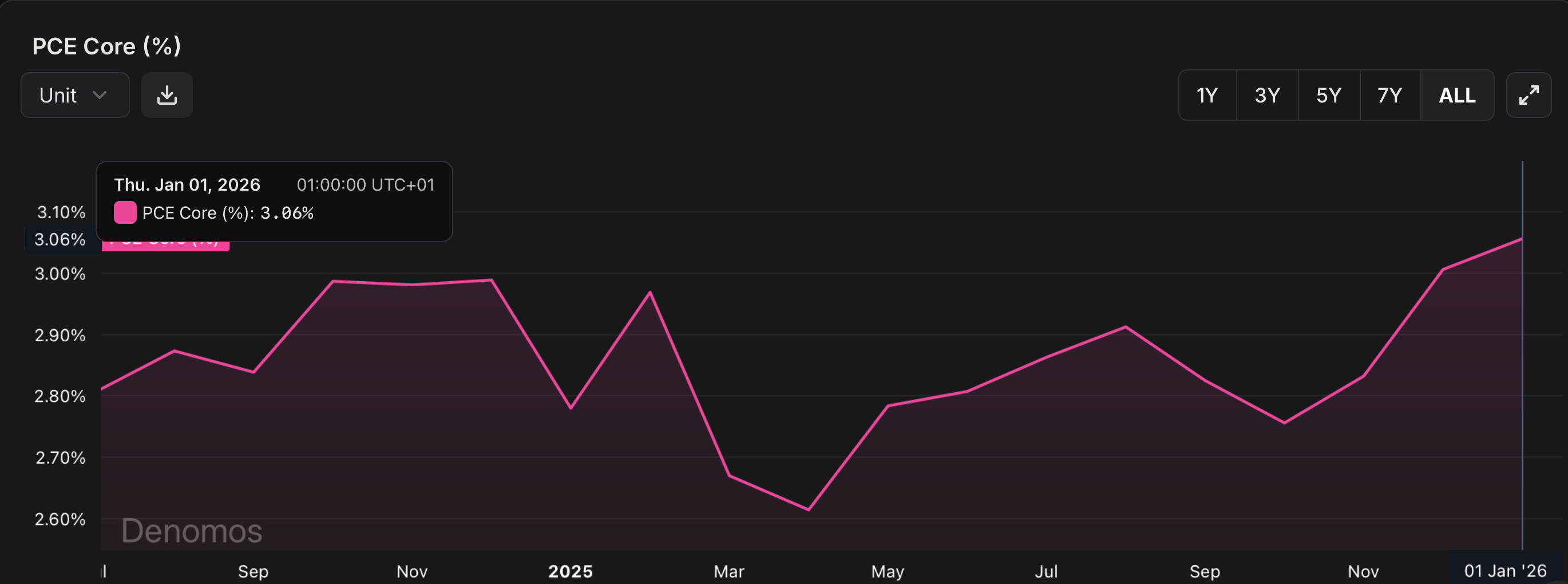
In that context, holding rates becomes the default decision. The Fed does not have enough evidence that inflation is under control to justify cuts. At the same time, they do not yet have a clear reason to tighten further. The key variable here is inflation, not unemployment. The slight increase in unemployment is not enough to shift policy, especially while inflation remains sticky.
This is where market expectations become disconnected from conditions. Rate cuts require either clear disinflation or a meaningful deterioration in growth. Right now, neither is present in a decisive way.
Moreover, the Fed’s projections from this meeting suggest inflation moving toward 2% by 2028, with gradual rate cuts and stable employment.
I find that projection difficult to take seriously under current conditions. If inflation remains sticky, rates likely need to stay higher for longer, or even increase. If growth weakens meaningfully, inflation may fall, but not in a controlled way. So how exactly do they arrive at that conclusion?
If you see a different path where these projections make sense, I’m genuinely interested. Feel free to share your view in the comments. 🙏
Beyond the Fed: Other Market Signals
The Fed sets the baseline, but the broader picture comes from a combination of financial conditions, growth, and inflation indicators.
Starting with financial conditions, the picture is neutral, with a slight tilt toward risk-off. ANCFI remains in healthy territory around -0.5%, which suggests no systemic stress. Real interest rates sit at around 0.5%, down from 2.5% over the past year and a half. In isolation, that would suggest improving conditions for risk assets.
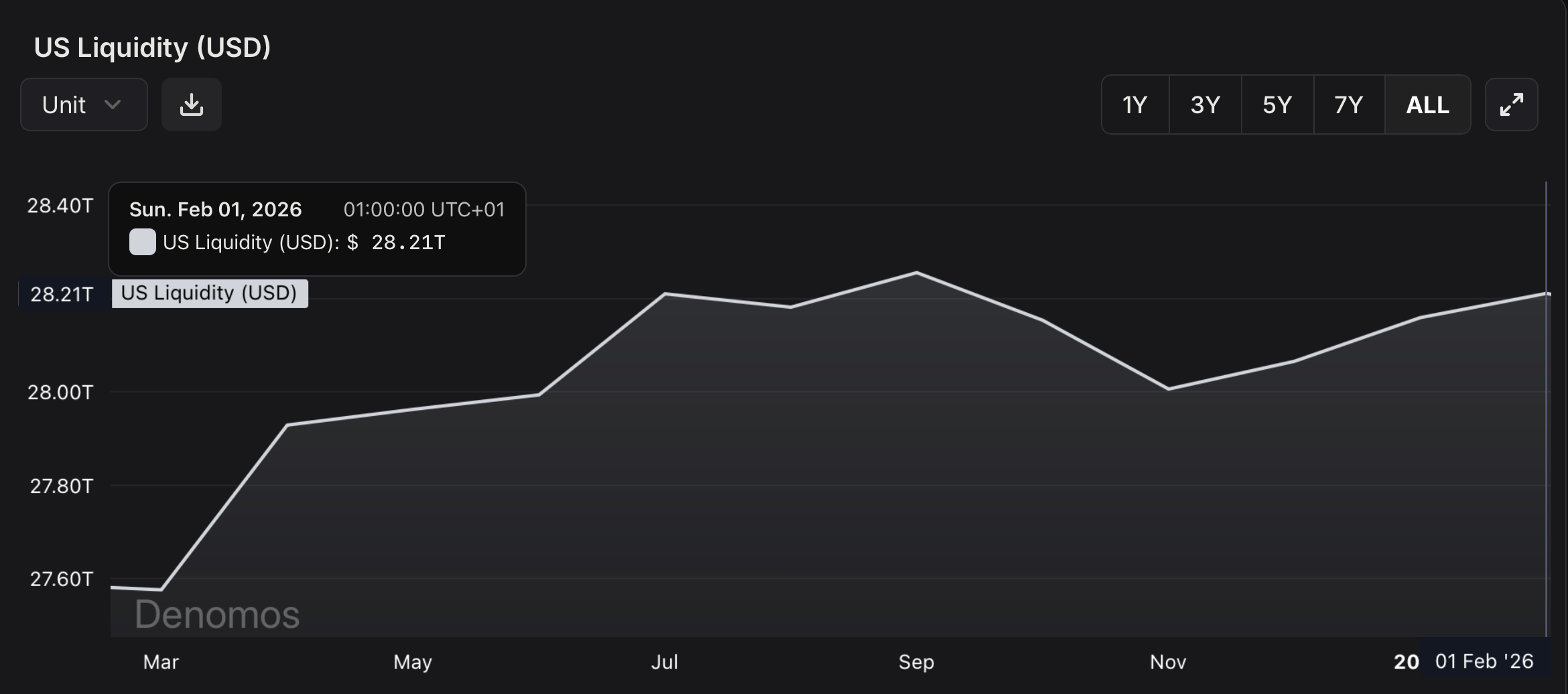
However, US liquidity has been flat, sitting around $28.2T and still below previous highs in September 2025. Global liquidity has increased by around $600B in February compared to January, but the growth rate is slowing. Without liquidity expansion, lower real rates are not sufficient to create a sustained risk-on environment.
The dollar is consolidating between 96 and 100, with a failed breakout above 100 last week. This is not a strong risk-on signal. TIPS yields are around 1.9% and have been stable in positive territory for years, indicating that investors are not under pressure to move into risk assets. At the same time, the MOVE index has jumped from below 60 to around 85, suggesting somewhat stress in the bond market. Overall, conditions are stable, but not relaxed.
On the growth side, the data looks better. The ISM PMI Composite is at 55.2%, with a strong monthly increase driven by services. This is the highest level since mid-2022 and confirms an ongoing uptrend. Yield curve spreads have been positive and rising since mid-2023, copper prices are trending up, and high yield spreads remain tight around 3%. Growth is present, but not accelerating aggressively.
Inflation remains the key constraint. Breakeven inflation at 2.4% suggests that markets are not fully aligned with the Fed’s long-term target. Oil prices around $95, up significantly due to geopolitical tensions, introduce additional upside risk. Energy is the variable that can shift the entire setup quickly.
Crypto Market Stats & Other Asset Classes
Short-term market sentiment in crypto is improving, but price is not confirming it yet. The Fear & Greed index has recovered from 8 in early February to 32, yet BTC and the broader crypto market have not followed with the same strength.
Furthermore, open interest on BTC is around 3.5% of MCap. This suggests the market is not overleveraged, which is structurally healthy. There has been a mild increase over the past two months, but nothing that changes the current interpretation.
From a technical perspective, the total crypto market moved into a deeply oversold condition in early February and is now recovering. I see strong support around $2T market cap, with current levels near $2.4T. A move back toward that support in the coming weeks or months would not be surprising. If that scenario plays out, I would look for a bullish RSI divergence as a condition for potential allocation.
For crypto excluding the top 10, market cap is around $175B, with a key support near $115B. Price action suggests a gradual pull toward that level.
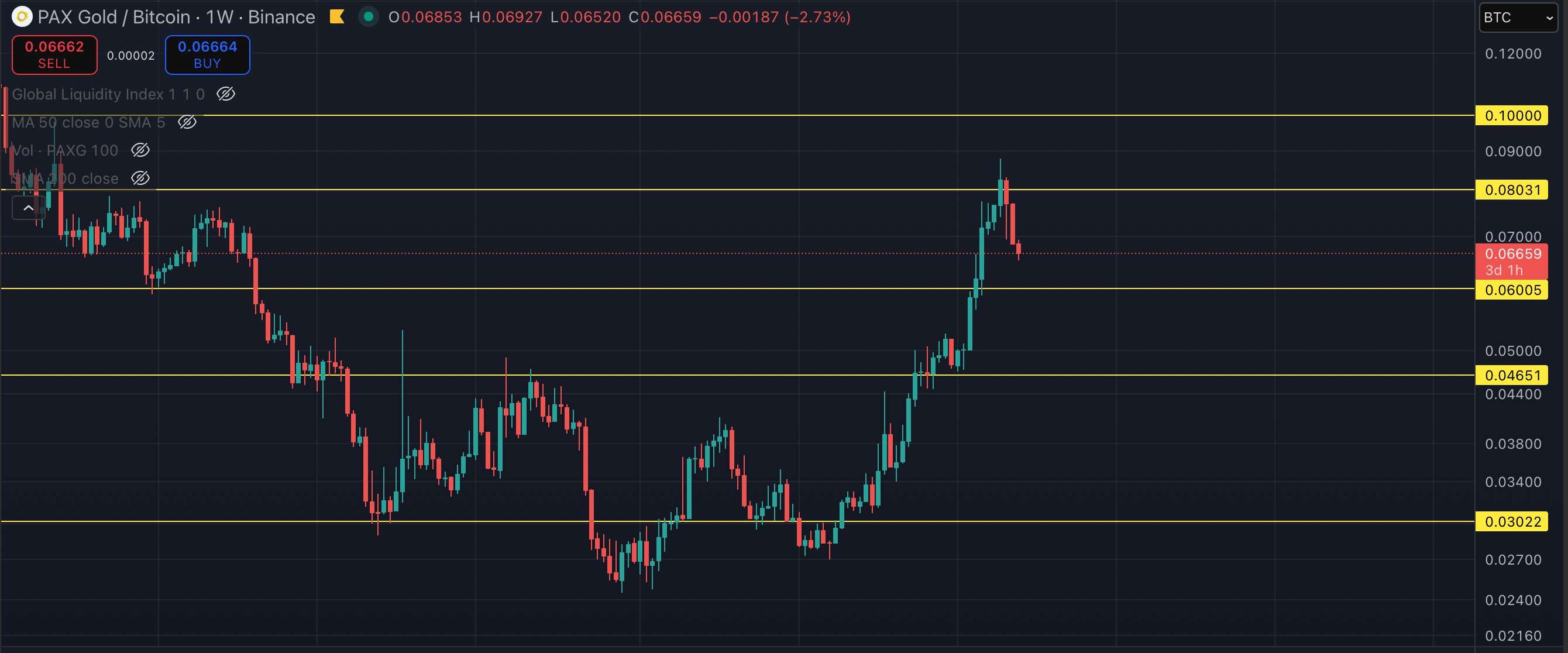
Gold is currently about 17% below its January ATH, while TLT (20+ years treasury bond ETF) is sitting near strong support. Bonds are still not attractive, but it is unclear how much further confidence can deteriorate without intervention.
My Conclusion from All the Macro & Crypto Parameters
The current setup can be described as slow growth with persistent inflation. That combination limits how much financial conditions can be relaxed without creating additional pressure on prices.
Without a meaningful easing of financial conditions, a broad altcoin cycle is unlikely. At the same time, easing too aggressively would risk accelerating inflation further, especially with energy prices already under pressure from geopolitical developments.
Based on the data, the system looks more fragile than stable. The probability of some form of disruption is increasing. That disruption could take the form of stagflation, where inflation remains elevated while growth slows, or a deflationary recession driven by demand contraction.
In both cases, the implication is similar. Remaining in a risk-off posture is more consistent with the current environment than moving aggressively into higher-risk assets.
Additionally, the geopolitical situation in the Middle East adds a layer of uncertainty that is difficult to model. Rising oil prices and direct disruptions to supply increase the likelihood that inflation becomes the dominant constraint again.
What This Means to My Crypto Portfolio
Given recent developments, especially the escalation in the Middle East and its potential impact on inflation, I am reconsidering my current positioning.
My portfolio is currently 100% in BTC. In the coming weeks, I am considering reallocating a portion into tokenized gold. I am watching the Gold/BTC ratio closely, with a level around 0.06 as a potential trigger. The exact allocation is still undecided.
For altcoins, my stance remains unchanged. This is not the environment where I see a strong case for exposure. For that to change, I would need to see both technical confirmation and an improvement in conditions for risk assets. At the moment, neither is present.
But my question for you:
Curious to hear your thinking. Feel free to share your reasoning in the comments.
Closing Words
I’m a retail investor, just like you, and a co-founder of Denomos, an analytics platform built to help crypto investors understand market regimes and positioning. All the data referenced in this post is available there, designed to make this kind of analysis more accessible.
If you want weekly breakdowns focused on where markets are heading and what that means for crypto, consider subscribing to my Substack. 🍻
If anything in this post was unclear or you want to go deeper into a specific part, feel free to ask. I’m always open to discussion and different perspectives.
Thanks for reading. 🙏
btw. Nothing in this post is financial advice, just my interpretation of the data. Do your own research and manage risk accordingly.